

- Content must rank in traditional Google search (SEO) AND surface in AI Overviews (GEO).
- Google AI Overviews pulls its answers from high-authority, clearly structured content for AI-generated summaries.
- First-paragraph clarity is critical: Your opening 1–2 sentences must directly answer the query – this is what AI systems cite and quote.
- E-E-A-T is now transparency-first: Trustworthiness (especially author credentials and source verification) is the gating factor.
- Core Web Vitals updated: INP (Interaction to Next Paint) replaced FID; prioritize responsiveness alongside speed.
- Real user behavior & engagement shapes visibility, directly influencing which results rank in the SERP.
- Community engagement and Reddit authority signals influence topical relevance.
In 2026, the most important Google search ranking factors include content relevance (aligned with search intent), content quality, helpfulness & uniqueness, E-E-A-T trustworthiness, Core Web Vitals responsiveness, diverse backlinks, Reddit authority signals, and consistent entity signals – optimized for both traditional Google rankings and AI Overviews.
Let’s break down each one and show you how to actually rank for them.
What Are the Core On-Page Ranking Factors in 2026?
1. Content Quality
When it comes to Google Search, a lot has changed in 2026. But here’s what hasn’t: content must be unique, comprehensive, and backed by original research or first-hand experience.
Google does not appreciate:
- Rehashed competitor content
- AI-generated filler without original insight
- Thin, unvaluable content
- Vague generalizations without sources
What Google values:
- Original research, data, or case studies
- Visible Author credentials and byline
- First-person accounts (“We tested,” “In our experience,” “Our client achieved”)
- Cited, reputable sources with links
Google’s spam detection now identifies AI-generated content at scale. Pages stuffed with AI-Generated content (even a well-written one) rank lower than pages with demonstrated expertise and originality.
Bevolix tip: If you’re using AI writing tools, use them to outline or draft a structure, then layer in original research, data, or expert commentary before publishing.
2. Content Length
There is no clear rule of thumb regarding the optimal word count for an article since it varies per subject; however, longer, more comprehensive content typically achieves higher rankings. A study by Neil Patel reveals a correlation between content length and top Google search positions.
Keep in mind that the length of your content should express its quality and in-depth nature, with each sentence providing additional, valuable pieces of much-needed information.
Bevolix tip: Investigate your potential readers’ possible queries, needs, and pain points and address them with professionalism and accuracy. Give them a reason to share your content, and stabilize your site as an authority in its field, not by a long collection of words, but by answering as many queries as possible. Complex topics should be divided into easily digestible segments, each corresponding to one idea emphasized in clear headers, short sentences, and visuals like tables, bullet points, infographics, etc.
3. Content Freshness
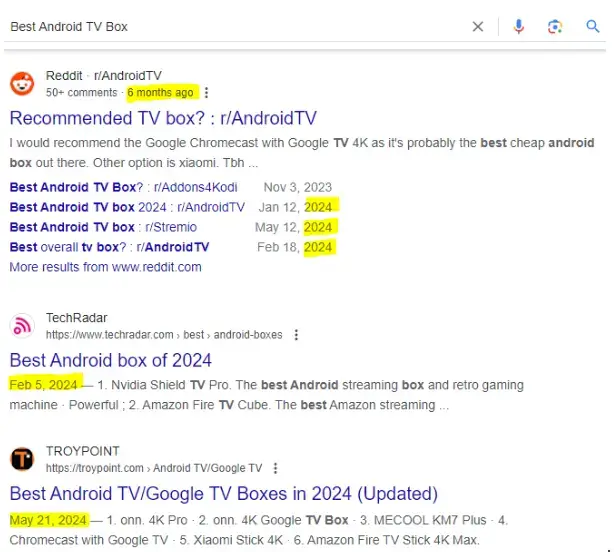
Refresh Old Content When It Matters. Freshness is a ranking signal, but strategic updates matter more than constant churn.
What works:
- Updating articles quarterly with new data, examples, and insights
- Clearly dating content (“Last updated: January 2026”)
- Adding new sections when the topic evolves (e.g., adding “AI Overviews” section to SEO guides)
- Removing outdated claims and replacing them with current ones
What doesn’t work:
- Updating content without changing substance (just changing dates)
- Publishing new articles on the same topic weekly (signals thin, duplicate content)
- Removing evergreen content in favor of constant “news” updates
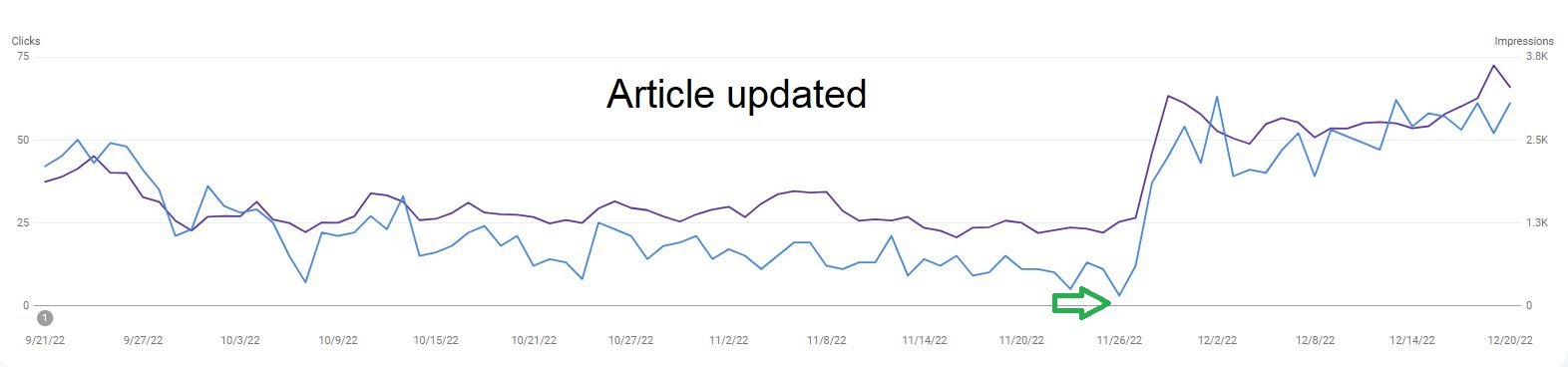
Bevolix tip: Establish an update cadence: technical topics every 3–6 months, foundational content annually, news-adjacent topics weekly.
4. Content Relevance
Well, this is probably the basis of on-page SEO. When starting an SEO project with thorough keyword research, consider the user intent in your decision-making.
In 2026, the algorithm doesn’t care about “exact match”; what matters is understanding user intent and predicting the questions they’ll search for.
Bevolix tip: Don’t underestimate the importance of long tails & semantic keywords as a significant portion of your SEO strategy.
- Metadata still counts! Use your main targeted keywords in the Title Tag, Headers, and, though it seems a bit outdated, in the meta description, to support CTR.
- Invest in an in-depth anchor audit to make sure your internal links’ anchors are in correlation with your overall SEO strategy.
5. E-E-A-T
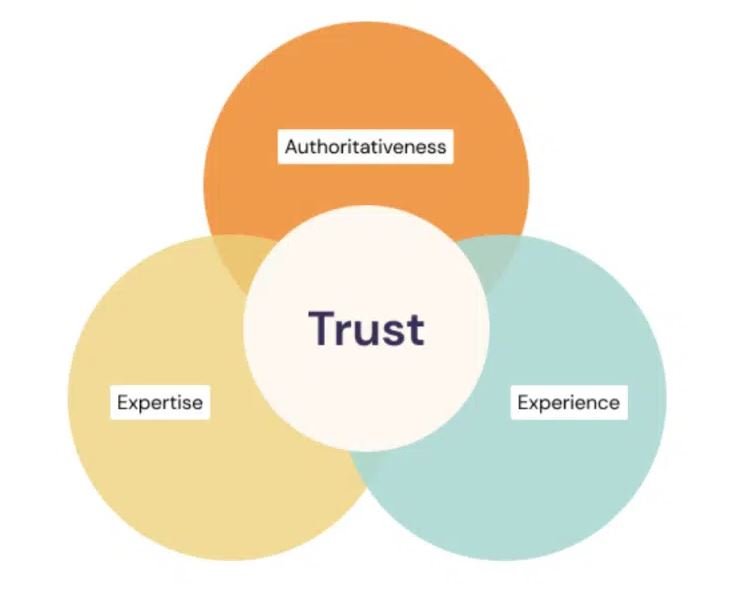
Trustworthiness is now the gating factor. If Google can’t verify who wrote the content or trust the sources, it won’t rank well, even if the expertise is real.
Google’s E-E-A-T framework has evolved:
- Experience: First-hand knowledge (author tested the product, lived the topic)
- Expertise: Demonstrated skill; credentials visible; sources cited
- Authoritativeness: Recognition by other authoritative sources (backlinks, press mentions, industry citations)
- Trustworthiness (MOST IMPORTANT): Transparent author info, clear sourcing, accurate claims, no conflicts of interest hidden
Concrete E-E-A-T signals:
- Author name + credentials visible on page
- Author bio links to author page or professional profile (LinkedIn, verified credentials). “About the Author” section explicitly states relevant expertise
- All statistics and claims are sourced with live links to original studies
- Conflicts of interest disclosed (e.g., “This product affiliate links may earn us a commission”)
- Privacy policy and contact page are present and complete
- Site ownership transparent (Who owns this site? When was it founded?)
Bevolix tip: Build Topic Authority With Consistent Entity Signals.
Google now heavily weights whether your site consistently presents itself as an authority on a specific topic, and whether that identity is verified across the wider web.
Which signals does Google check?
- Does your site consistently use the same brand/company name?
- Do your Knowledge Panel, Wikipedia (if applicable), LinkedIn company page, and website all agree on what your company does?
- Do authoritative sites link to you using consistent naming?
- Do you cover related topics with semantic depth, not scattered across unrelated subjects?
How does this affect GEO?
AI systems build “entity maps” of companies, brands, and topics. If your Google Business Profile says you’re a “digital marketing agency,” but your website randomly covers pet grooming, you confuse the AI. It won’t cite you as an authority on marketing.
For YMYL (Your Money Your Life) topics (health, finance, legal):
This is non-negotiable. Google will not rank sites without verified author credentials and clinical/legal review.
6. Content Structure
AI models prefer well-organized, scannable content:
- Your opening must answer the query clearly and concisely.
- Use H2 and H3 headers as questions (not just topic labels)
- Break paragraphs into 2–3 sentences max
- Use bullet points and numbered lists liberally
- Include tables comparing concepts
- Use bold to highlight key terms on first use
Bevolix tip: Write your opening paragraph as if someone asked the question aloud and expects a 10-second answer. Then expand.
7. Engagement & Real User Behavior
Google openly uses anonymous user behavior data from Chrome to influence rankings.
What Google measures:
- Click-through rate (CTR): How often users click your result vs. competitors for the same query
- Session length: How long users spend on your page before returning to search
- Scroll depth: How far down the page users scroll
- Return rate: Whether users return to your page for follow-up searches
- Pages per session: Multi-page engagement on your site
A lower-ranked page with better engagement can outrank higher-positioned pages with poor engagement over time.
Bevolix tip: Monitor CTR and dwell time in Google Search Console. If CTR is low, improve your meta description and title tag. If dwell time is low, improve content quality and page structure.
What are the 2026 Technical Ranking Factors?
8. Core Web Vitals
What changed: In 2024, Google replaced FID (First Input Delay) with INP (Interaction to Next Paint) as the responsiveness metric. INP reflects real user interactions across the entire page visit, not just the first interaction.
The three Core Web Vitals (2026):
- LCP (Largest Contentful Paint): Target < 2.5 seconds. Measures how quickly the largest element on the page loads.
- INP (Interaction to Next Paint): Target < 200ms. Measures how quickly the page responds to user input (clicks, taps, keyboard).
- CLS (Cumulative Layout Shift): Target < 0.1. Measures visual stability (elements shouldn’t move around unexpectedly).
How to improve INP:
- Break up long JavaScript tasks (use `requestIdleCallback`)
- Optimize event listeners for responsiveness
- Reduce third-party script impact
- Defer non-critical JavaScript
9. Mobile-First Indexing (Mandatory Since 2019, Enforced 2026)
Your mobile version must be equal in quality to (or better than) your desktop version.
What Google checks:
- Content parity: Is all content available on mobile? (Some sites hide content on mobile. Don’t.)
- Mobile navigation: Is it intuitive? Do menus work?
- Tap targets: Are buttons and links big enough (48px+)?
- Text legibility: Is the font size readable without zooming?
- Page speed: Is the mobile version fast?
Bevolix tip: Test your site on mobile. If you struggle to navigate or read text, Google will too.
10. HTTPS & Security
HTTPS is mandatory for any site collecting data (forms, logins, payments). For content-only sites, it’s still recommended.
11. XML Sitemap & Robots.txt
- XML Sitemap: Helps Google discover all important pages. Update it when you publish new content.
- Robots.txt: Tells Google which pages to crawl and which to skip. A poorly configured robots.txt can prevent indexation.
12. Structured Data (Schema Markup)
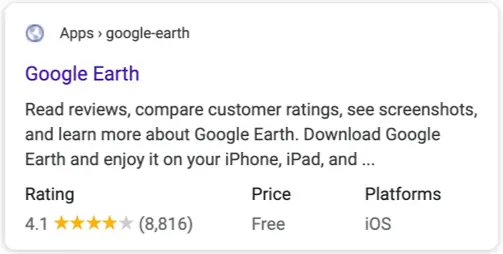
Schema markup makes it easy for both Google and AI systems to understand and extract your content, which improves your chances of ranking and appearing in overviews for the most relevant types of queries.
What are the Off-Page Ranking Factors?
13. Backlinks from Authoritative Sources
Backlinks remain crucial, but quality vastly outweighs quantity.
What matters:
- Links from established, topically-relevant authority sites
- Diverse link profiles (different domains, not all from one source)
- Links with descriptive anchor text (not “click here”)
- Contextual links (links within article body, not just footers)
What hurts:
- Low-quality directory links
- Links from unrelated industries
- Exact-match anchor text abuse (signals manipulation)
- Purchased links (Google’s spam updates specifically target these)
14. Reddit Authority & Community Signals
Reddit discussions now directly influence rankings, especially for:
- Topical authority: Credible discussions on relevant subreddits boost your site’s topical authority if linked to.
- Brand sentiment: Positive Reddit discussions about your brand signal trustworthiness.
- User intent: Reddit conversations show what users *actually* ask and care about. Google uses these for query understanding.
15. Social Signals (Limited, But Present)
Direct social media metrics (likes, shares) don’t directly rank. However:
- High-visibility posts increase brand awareness and branded searches
- Links from social platforms to your site count as backlinks
- Branded social profiles improve entity consistency
What are the Domain Ranking Factors?
16. Branded Searches
Branded searches provide a strong signal to Google’s search algorithm. The more traffic a website gets from branded searches, the more it will be recognized by the algorithm
17. Domain Power & Seniority
In the past, exact-match domains were a sure-fire way to boost organic search visibility. While not as foolproof as before, domains still have influence. Exact-match domains still carry a lot of weight.
Domain age is another major ranking factor. New domains have a harder time ranking for top keywords, while domains with an extended track record seem to hold top positions for longer.
What the Google API Leak Actually Confirmed
In March 2024, thousands of confidential documents coming from Google’s content API were revealed, providing us a rare glimpse into the way Google’s algorithm actually works. Here are the main takeaways from the documentation leak:
siteAuthority
Found in the QualityNsrNsrData module. Confirms a domain-level ranking signal exists – a site-wide link-popularity and trust score. This is effectively what the SEO industry has called “domain authority” for years, which Google repeatedly denied.
navBoost
The most significant revelation. NavBoost is a Twiddler – a re-ranking function applied after initial ranking – that re-orders results based on user click behavior. It uses five categories of click signals: goodClicks (user stays), badClicks (user bounces back to SERP), lastLongestClicks (final click in session with longest dwell – the strongest positive signal), and normalized versions of raw click data. NavBoost operates on a 13-month rolling data window, which explains why new pages take time to build ranking momentum.
chromeInTotal
Chrome browser behavior data used for ranking – scroll depth, time on page, return-to-SERP behavior. Google denied using Chrome data for ranking for over a decade. The leak confirmed it is actively referenced.
contentEffort
An LLM-estimated score for human content effort – how much original work went into the content versus how much was generated or templated. This is the mechanism behind Google’s ability to detect and discount AI-generated content at scale.
pandaDemotion
A live, active penalty for thin or duplicate content. Not a historical algorithm but an ongoing demotion signal applied to pages that fall below quality thresholds.
siteFocusScore and siteRadius
Two attributes measuring topical concentration. siteFocusScore measures how concentrated your domain’s content is on a specific topic. siteRadius measures how far your content spreads from your core topic. High focus + low radius = stronger topical authority for your core queries.
lastSignificantUpdate
The internal freshness signal. This is what Google actually tracks for freshness purposes – not the published date, but the date of the last meaningful content change. Updating dates without updating substance does not move this signal.
CrapsNewness
The module handling freshness signals more broadly – recency, update frequency, and how news-adjacent content is treated versus evergreen content.
Bonus: How to Avoid Ranking Penalties in 2026?
AI-Generated Content Detection & Duplication
Google now detects AI-generated content at scale. Pages that are pure ChatGPT output, even well-written, rank lower than pages with demonstrated originality and expertise.
What to avoid:
- Multiple pages on the same topic with a similar structure (indicates template abuse)
- No author attribution
- Generic introductions and conclusions
- No original data or research
- Contradictions or inaccuracies
Safe AI use:
- Use AI to outline the structure or draft rough sections
- Layer in original research, expert commentary, and first-hand experience
- Always attribute and review for accuracy before publishing
- Maintain one-per-topic rule (don’t publish 10 variations of the same guide)
Unnatural Link Profiles (Spam Updates)
How to stay safe:
- Don’t buy links
- Don’t participate in link schemes
- Don’t use exact-match anchor text exclusively
- Do mark commercial links with `rel=”sponsored”`
- Do diversify link sources (different domains, TLDs, anchor types
Frequently Asked Questions
No, SEO is not dead. In fact, not only do AI Overviews and different LLMs pull their answers from top-ranked websites, but also, studies show that search rank is the second-strongest AI citation factor. Traditional Google rankings are still the foundation. Nail SEO first, and AI Overviews will follow.
No. John Mueller confirmed that relevance and content quality are “by far much more important” than Core Web Vitals. Content quality, backlinks, and user engagement have a stronger correlation with rankings overall. That said, Core Web Vitals can help you win when competitors have similar content quality.
Links from Reddit count as backlinks. More importantly, Reddit discussions influence how Google understands user intent and topics. If your target audience discusses your topic on Reddit, make sure your content addresses those discussions.
It depends on the topic. News-adjacent or technical content: quarterly or when new info emerges. Evergreen guides: annually or when processes change significantly. Don’t update just for the sake of freshness.
No, SEO is not dead. In fact, not only do AI Overviews and different LLMs pull their answers from top-ranked websites, but also, studies show that search rank is the second-strongest AI citation factor. Traditional Google rankings are still the foundation. Nail SEO first, and AI Overviews will follow.
No. John Mueller confirmed that relevance and content quality are “by far much more important” than Core Web Vitals. Content quality, backlinks, and user engagement have a stronger correlation with rankings overall. That said, Core Web Vitals can help you win when competitors have similar content quality.
Links from Reddit count as backlinks. More importantly, Reddit discussions influence how Google understands user intent and topics. If your target audience discusses your topic on Reddit, make sure your content addresses those discussions.
It depends on the topic. News-adjacent or technical content: quarterly or when new info emerges. Evergreen guides: annually or when processes change significantly. Don’t update just for the sake of freshness.
Final Thoughts
SEO in 2026 is no longer just about appearing first in the traditional SERP links. You must optimize for two surfaces: traditional Google rankings and AI-powered search results. This means writing clear, sourced, well-structured content with transparent author credentials and original expertise.
The good news: the fundamentals haven’t changed. Quality content, authoritative sources, good user experience, and earned links still drive rankings. What’s new is the scrutiny around trustworthiness, the visibility of AI Overviews, and the emphasis on first-paragraph clarity and content structure.
Focus on these fundamentals, stay updated on Core Web Vitals and Search updates, and you’ll rank well in 2026 and beyond.